

Kedarnath is a place where faith, history, and the unexplained have coexisted for centuries. Here are its deepest mysteries.
🏔️ The Mystery of Its Location
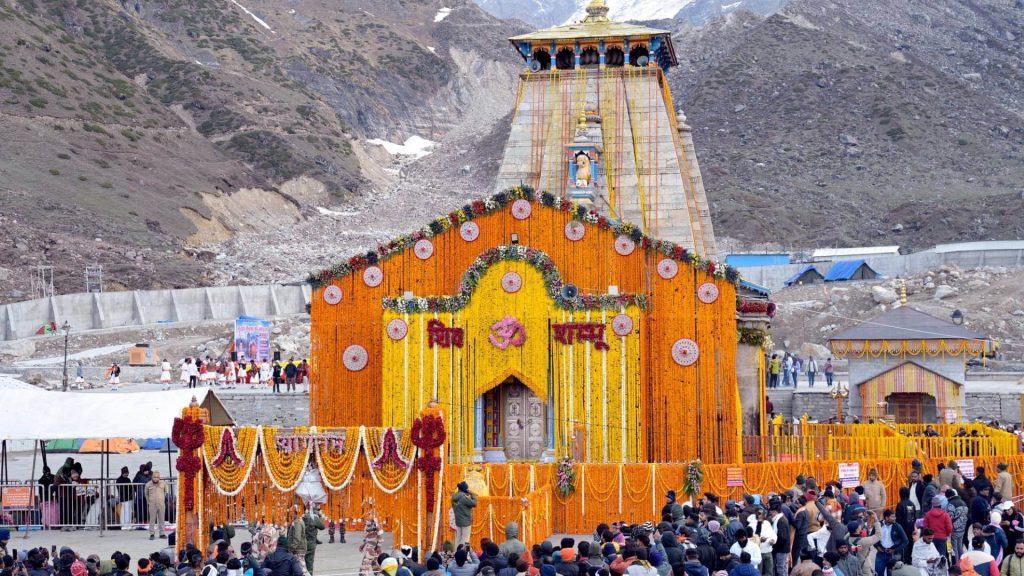
Kedarnath temple sits at 3,583 meters above sea level — a place buried under heavy snow for 6 months a year, battered by fierce winds, and subject to some of the harshest conditions on earth.
Yet a massive stone temple was built here over 1,200 years ago — without any modern machinery. Where the enormous stones came from, how they were transported up the mountain, and how they were assembled with such precision remains incompletely explained to this day.
🪨 The Mystery of Its Structure
- The temple is built in the Kатyuri style — massive stones interlocked without any mortar, cement, or binding material.
- The stones are cut so precisely that there are virtually no gaps between them.
- Most remarkably: during the catastrophic floods of 2013, the entire Kedarnath valley was devastated. Thousands of people died. Buildings were swept away. But the temple itself stood completely unharmed.
- A massive boulder came to rest directly behind the temple during the flood, deflecting the water and debris around it. Many consider this a miracle. Engineers find it deeply puzzling.
🔱 The Mystery of the Jyotirlinga
- The object of worship here is not a sculpted idol but a naturally occurring triangular rock — believed to be swayambhu (self-manifested), meaning no human hand created it.
- Hindu tradition holds that this is the hump (back) of Lord Shiva, who took the form of a bull to escape the Pandavas and submerged into the earth here.
- The other parts of Shiva’s body are said to have emerged at four other sites — together these five places form the Panch Kedar pilgrimage.
❄️ The Mystery of the Six-Month Closure
- Every year, the temple closes for winter around November and reopens in May.
- During these months, priests perform a remarkable ritual: they light a sacred lamp inside the temple before closing it, and when they return six months later, the lamp is still burning.
- How a lamp survives six months of sub-zero temperatures, snowfall, and complete isolation has never been scientifically explained.
🕰️ The Mystery of Its True Age
- Popular belief credits Adi Shankaracharya with renovating the temple in the 8th century AD — and he is said to have attained samadhi (final liberation) here at age 32.
- But some historians and geologists argue the original structure is far older — possibly dating back to the Mahabharata era, built by the Pandavas themselves.
- The style of construction shows similarities to structures far older than the 8th century, and the site itself is mentioned in some of the oldest Hindu texts.
🌀 The Broader Mystical Belief
Kedarnath sits at the edge of what Hindus call the Char Dham — the four sacred abodes. But more than geography, it is considered one of the places on earth where the boundary between the material and the spiritual is thinnest. Yogis and saints have meditated in its surrounding caves for millennia, many never returning to the outside world.
Whether you approach it through faith, history, or curiosity — Kedarnath refuses to give up all its answers.